


Quick Specs
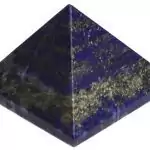
- Type: Polished lapis lazuli pyramid, sacred geometry
- Size: 30 mm
- Size/Quantity: 25-30mm base, single piece
- Best for: Third eye meditation, truth work, crystal grids, altar display
Lapis Lazuli: The Stone of Wisdom and Truth
Lapis lazuli has been prized as one of the most spiritually significant stones in human history, with use documented from ancient Mesopotamia and Egypt through the Renaissance and into modern crystal practice. The stone is a metamorphic rock composed primarily of lazurite for its deep blue color, calcite, and pyrite, the last of which produces the golden flecks visible in most quality specimens. Ancient Egyptians ground lapis into powders for pigment and used it in sacred amulets associated with truth, royalty, and divine protection. The Sumerians traded it across vast distances as a luxury material connected to the heavens, its deep blue seen as a reflection of the night sky.
In modern crystal practice, lapis lazuli is most strongly associated with the third eye chakra, the energy center governing intuition, inner vision, and the capacity to perceive beyond surface appearances, and with the throat chakra, which governs clear and honest communication. Practitioners who work on truth-telling, reducing self-deception, accessing higher wisdom, or deepening meditative awareness find lapis particularly useful as a focal stone. The pyramid form channels and amplifies these properties upward through the apex, a geometry long associated with directing energy in a focused direction during ritual and meditation work.
Working with Lapis Lazuli in Sacred Geometry Practice
The pyramid form appears across cultures as a symbol of focused intention and upward-moving energy. Placing a lapis pyramid at the center of a crystal grid activates the grid’s truth and clarity intention, while positioning it at the head or third eye during meditation directly engages the stone’s chakra correspondences. Lapis also pairs well with clear quartz for amplification, with sodalite for a complementary throat-chakra effect, and with amethyst for deepening psychic awareness during divination preparation. Explore more sacred geometry pieces in my crystal pyramid collection for pairing options.
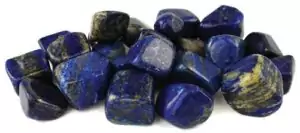
Each piece in this listing measures 25-30mm at the base, making it compact enough for palm meditation and substantial enough to serve as a genuine altar centerpiece. The polish brings out lapis lazuli’s characteristic deep royal blue with white calcite veining and golden pyrite inclusions. Because lapis is a naturally occurring rock rather than a uniform mineral, each piece varies in the ratio of blue to white and the distribution of pyrite flecks, which means no two pyramids are identical. This natural variation is a marker of genuineness.
How to Use a Lapis Lazuli Pyramid
How to incorporate a lapis lazuli pyramid into third eye meditation, crystal grids, or altar work.
- Set your intention
Hold the lapis lazuli pyramid in both hands for a moment before placing it. Take a few slow breaths and set a clear intention for truth or insight. This brief act of focus aligns your work with the stone’s properties.
- Place for practice
Place the pyramid point-up at the center of your meditation space, altar, or crystal grid. The pyramid geometry directs energy upward through the apex. For third eye work, position it directly before you during practice.
- Clear and maintain
After use, clear the pyramid by placing it on a selenite plate overnight or setting it in brief indirect moonlight. Avoid prolonged water contact, as it may affect the polished surface of the stone over time.
The Tarot Fellow Standard
I stock lapis lazuli pyramids because lapis is one of the few stones whose spiritual lineage is both ancient and verifiable, tracing back to Egyptian, Mesopotamian, and Persian ritual use over millennia. This pyramid format gives that lineage a practical, modern form suited to crystal work, altar display, and meditation. The 25-30mm size hits a useful working dimension without being so small it gets lost on the altar. Browse my full crystal and gemstone collection to find complementary stones for your practice.
Frequently Asked Questions
Lapis lazuli is a metamorphic rock composed primarily of lazurite, calcite, and pyrite. The golden flecks seen in many pieces are pyrite inclusions. True lapis ranges from deep royal blue to slightly mottled blue-grey.
Lapis lazuli is strongly associated with the third eye and throat chakras. It is used in meditation and ritual work to support spiritual insight, truth-telling, clear communication, and access to higher wisdom.
Dyed howlite or sodalite are the most common lapis substitutes sold at low cost. Natural lapis typically shows uneven blue tones, white calcite streaks, and golden pyrite flecks. Uniform bright blue suggests dye.
At 25-30mm, this pyramid fits comfortably in the palm and works well as a focal point in a crystal grid, a meditation piece, or an altar ornament. Its compact size also makes it easy to travel with for practice.





Reviews
There are no reviews yet