
Quick Specs
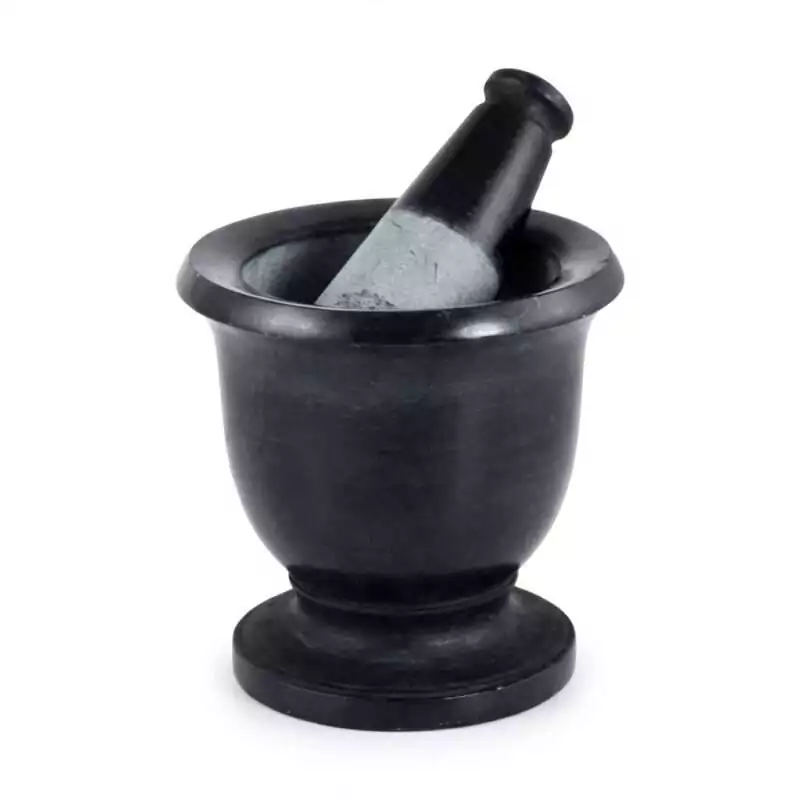
- Material: Black glazed soapstone (steatite)
- Size: 3 inches wide x 2 inches tall
- Best for: Grinding ritual herbs, incense blends, resins, and kitchen botanicals
- Finish: Black glaze over hand-carved soapstone
Why Soapstone Stands Apart from Other Mortar Materials
Soapstone, known mineralogically as steatite, is a metamorphic rock composed primarily of talc with inclusions of chlorite, magnesite, and dolomite. Its defining characteristic is an exceptionally high resistance to heat, a quality so reliable that soapstone has been used to line wood-burning stoves and fireplaces across Europe and Scandinavia for over a thousand years. Native American communities in the eastern woodlands and along the Pacific coast carved soapstone into cooking bowls and pipe bowls specifically because the material could withstand direct flame without cracking, a property that granite and marble cannot match. This heat tolerance makes a soapstone mortar and pestle the only stone grinding tool that can safely be placed near a candle or brazier without risk of thermal shock.
The black glaze on this set adds a smooth interior finish that reduces porous absorption compared to raw soapstone, making cleanup easier and preventing herb cross-contamination between sessions. Unlike onyx or marble, soapstone is non-reactive to acids and bases, meaning citrus rinds, vinegar-steeped herbs, and plant resins do not etch or discolor the surface over time. The natural talc content gives the stone a silky tactile quality that makes grinding a satisfying process, and the weight of the material holds it steady on an altar cloth or countertop without shifting. Browse my mortar and pestle collection to compare this set with others I carry across different materials and sizes.
How Kitchen Witches and Ritual Practitioners Use a Stone Mortar
For kitchen witches and green witches, a dedicated ritual mortar preserves the intentional energy of each working. Grinding dried rosemary, mugwort, or wormwood by hand in a stone mortar releases volatile oils more completely than pre-ground preparations, producing a fresher, more potent result for incense blends or sachet powders. Many practitioners speak of the grinding process itself as an act of intent-setting, where the physical labor of reducing herbs to powder becomes a meditation on the working’s purpose. The mortar is also used to crush resins like dragon’s blood, copal, or frankincense into coarse powder for charcoal disc burning.
This 3-inch by 2-inch size is the practical choice for single-session herb preparation rather than batch grinding. It holds enough material to produce a full blend for a ritual working without requiring more storage space than a small altar can accommodate. The pestle fits comfortably in one hand, allowing controlled pressure for both coarse crushing and fine powder reduction. For practitioners building a layered herbal practice, having a dedicated black soapstone mortar reserved for protection or banishing herbs keeps working blends separate from prosperity or love herb preparations, preventing unintentional scent mingling.
How to Use a Black Soapstone Mortar and Pestle
How to prepare, use, and maintain your black soapstone mortar and pestle.
- Season Before First Use
Rinse the mortar with warm water and dry thoroughly. Grind a small amount of white rice to a fine powder to remove stone dust from the carving process, then discard the rice and wipe clean before your first ritual or culinary herb preparation.
- Grind Herbs for Incense or Sachet Blends
Add a small pinch of dried herbs and press the pestle with a rolling motion, working center outward. For resins like dragon's blood or copal, break into small pieces first, apply firm downward pressure, then switch to a circular grinding motion.
- Clean Between Workings
Wipe the interior with a damp cloth and air dry completely. Avoid soaking in water or using soap regularly, as this can dull the glaze over time. For a thorough cleanse between herb blends, grind a pinch of plain salt, discard it, then wipe clean.
The Tarot Fellow Standard
This is the sixth mortar and pestle I carry in the store, and I added it because no other stone in the lineup offers soapstone’s particular combination of heat resistance, non-reactive surface chemistry, and smooth grinding texture. The black glaze finish makes it visually suited for shadow work, protection magic, and banishing herb preparations in a way that lighter-colored stone sets do not. If you are building out a complete herb and ingredient preparation setup, pair this with dried herbs, ritual sachet blends, or loose resins from my herbs and accessories collection to round out your working toolkit.
Frequently Asked Questions
Soapstone (steatite) is a talc-rich metamorphic rock prized for heat resistance, a non-porous surface, and non-reactive chemistry. It does not absorb moisture, etch from acids, or crack under heat, making it ideal for grinding herbs and resins.
Yes. Soapstone is food-safe and has been used for cookware across many cultures for thousands of years. Season it with rice before first use, and keep separate sets for culinary and ritual work if you prefer to avoid scent mixing between uses.
Soapstone is softer, smoother, and more heat-resistant than onyx or marble. It is also non-reactive, so acids from citrus or resin will not etch the surface. Onyx and marble are harder but will pit or stain with prolonged exposure to acid.
Wipe with a damp cloth and let air dry fully. Avoid soaking or using soap regularly, as this can dull the glaze over time. For a quick cleanse between herb blends, grind a small pinch of plain salt, discard it, and wipe clean before the next use.
1 review for Black Soapstone Mortar and Pestle — 3-Inch Herb Grinding Set Glazed Finish